Gorilla Trekking Walking Sticks: Do You Need One?
Gorilla trekking walking sticks are highly recommended for visitors exploring the mountainous forests of Uganda and Rwanda. Although carrying a walking stick is not generally compulsory, it provides additional stability, improves balance and helps reduce physical strain when navigating steep slopes, muddy trails and uneven forest terrain.
Mountain gorilla trekking often involves walking through dense vegetation, crossing shallow streams and climbing hillsides with exposed tree roots. Even physically fit travellers can find these conditions challenging, particularly following heavy rainfall.
Whether you are visiting Bwindi Impenetrable National Park, Mgahinga Gorilla National Park or Volcanoes National Park, a suitable walking stick can make your forest experience more comfortable.
Understanding the benefits of walking sticks, the available types and how to use them correctly will help you prepare for your gorilla safari and enjoy the trek with greater confidence.
Why Gorilla Trekking Walking Sticks Are Important
Gorilla trekking differs considerably from walking along established recreational hiking trails. Mountain gorillas move freely through protected forests, and reaching them sometimes requires visitors to navigate areas without clearly defined paths.
A walking stick provides an additional point of contact with the ground, helping you maintain balance when walking across challenging surfaces.
| Forest walking challenge | Benefit of a walking stick |
|---|---|
| Muddy trails | Improves stability |
| Steep uphill slopes | Provides additional support |
| Steep descents | Helps control movement |
| Exposed tree roots | Assists with balance |
| Shallow streams | Helps assess footing |
| Uneven forest terrain | Improves walking confidence |
| Long trekking distances | May reduce physical fatigue |
| Slippery surfaces | Provides additional stability |
A walking stick cannot eliminate the risk of falling, but it can make difficult forest sections more manageable.
Benefits of Using Walking Sticks During Gorilla Trekking
1. Improved Balance and Stability
Bwindi’s mountainous landscape contains uneven surfaces that require careful foot placement. Loose soil, wet leaves and exposed roots can make maintaining balance difficult.
A walking stick provides additional support when stepping over obstacles or navigating narrow forest paths.
This is particularly useful when walking downhill, where maintaining controlled movement becomes increasingly important.
2. Reduced Pressure on Your Knees
Descending steep forest slopes can place considerable pressure on your knees and lower legs.
Correctly using trekking poles can help distribute some of the physical load through your upper body.
Travellers with sensitive knees may appreciate this additional support, particularly during longer treks.
However, anyone with significant joint problems should consult a healthcare professional before undertaking demanding mountain walks.
3. Additional Support During Uphill Walking
Gorilla trekking sometimes involves sustained climbing through mountainous terrain.
A walking stick allows you to engage your arms when moving uphill, providing additional support when your legs become tired.
Maintain a comfortable walking pace and take short breaks whenever necessary.
4. Greater Confidence on Muddy Trails
Rainfall remains possible throughout the year in Uganda and Rwanda’s mountain forests.
Muddy slopes can become particularly difficult to navigate, even when wearing suitable waterproof hiking boots.
A walking stick helps you check the stability of the ground before transferring your body weight.
5. Assistance During Longer Treks
Gorilla trekking duration varies considerably depending on the location of your assigned gorilla family.
Some encounters require relatively short walks, while others involve several hours of trekking.
A walking stick may help reduce fatigue and improve walking comfort during extended forest excursions.
Types of Walking Sticks for Gorilla Trekking
Visitors can choose between traditional wooden walking sticks and modern adjustable trekking poles.
Traditional Wooden Walking Sticks
Traditional wooden walking sticks are commonly available around gorilla trekking destinations in Uganda and Rwanda.
Local craftspeople produce some of these sticks using suitable wood. Lodges, porters and safari operators may provide them for visitors.
They are generally straightforward to use and require no complicated adjustments.
However, fixed-length wooden sticks may be less suitable for travellers who require specific height adjustments.
Adjustable Aluminium Trekking Poles
Aluminium trekking poles offer durable construction and adjustable lengths.
Their height can be modified according to your body size and prevailing walking conditions.
They are particularly useful for travellers undertaking multiple hiking activities during their East African holiday.
Carbon Fibre Trekking Poles
Carbon fibre poles are generally lightweight and convenient for extended walking activities.
They appeal to experienced hikers who want to minimise equipment weight.
However, they can be more expensive and may be vulnerable to damage when subjected to excessive sideways pressure.
Folding Trekking Poles
Folding trekking poles are designed for convenient transportation. Their compact construction makes them particularly suitable for international travellers with limited luggage space.
Check the locking mechanisms and overall stability before using them on demanding forest trails.
Wooden Walking Sticks vs Modern Trekking Poles
| Feature | Wooden walking stick | Modern trekking pole |
|---|---|---|
| Height adjustment | Usually fixed | Generally adjustable |
| Weight | Varies | Generally lightweight |
| Availability | Often available locally | Usually purchased before travel |
| Transportation | Less convenient | Compact models available |
| Cost | Generally affordable | Depends on construction |
| Maintenance | Minimal | Requires occasional inspection |
| Grip | Basic wooden handle | Foam, cork or rubber |
| Suitability | General gorilla trekking | Regular hiking and extended safaris |
For most visitors undertaking a single gorilla trek, a locally provided wooden walking stick is sufficient. Experienced hikers may prefer bringing their own adjustable trekking poles.
Are Walking Sticks Provided During Gorilla Trekking?
Walking sticks are commonly available at gorilla trekking destinations in Uganda and Rwanda. Some safari lodges provide them as part of their guest services, while others arrange them through local porters or trekking centres.
Visitors should confirm availability with their safari operator before departure.
Bwindi Impenetrable National Park
Walking sticks are frequently available around Bwindi’s four trekking sectors: Buhoma, Ruhija, Rushaga and Nkuringo.
Many accommodation facilities can arrange walking sticks for guests before their early morning trekking briefing.
Mgahinga Gorilla National Park
Visitors trekking in Mgahinga can arrange walking sticks through their accommodation or safari operator.
The park’s volcanic terrain, bamboo forests and mountain slopes make additional walking support particularly useful.
Volcanoes National Park
Walking sticks are commonly provided or arranged for visitors undertaking mountain gorilla trekking in Rwanda.
Travellers should ask about availability before leaving the trekking headquarters.
Do You Need One or Two Walking Sticks?
Both options can be useful, depending on your walking experience and personal preferences.
A single wooden walking stick is convenient when navigating dense vegetation because it leaves your other hand available for additional support.
Two trekking poles may provide more balanced support during longer climbs and descents. However, they can become inconvenient when moving through thick vegetation or handling photography equipment.
Visitors who regularly hike with two poles may prefer maintaining their usual walking technique.
How to Choose the Correct Walking Stick Height
A correctly sized walking stick improves comfort and provides more effective support.
When standing upright on level ground, your elbow should generally form an angle of approximately 90 degrees while holding an adjustable trekking pole.
| Traveller height | Approximate trekking pole length |
|---|---|
| 150–160cm | 100–110cm |
| 160–170cm | 110–115cm |
| 170–180cm | 115–125cm |
| 180–190cm | 125–135cm |
| Above 190cm | 135cm or longer |
These measurements are general fitting guidelines. Arm length, posture and personal comfort should determine your final adjustment.
Shortening adjustable poles slightly during uphill walking and lengthening them during descents may improve comfort.
Walking Sticks for Bwindi’s Four Trekking Sectors
Buhoma Sector
Buhoma contains forest valleys, established walking trails and varying mountain slopes. A traditional wooden walking stick generally provides sufficient additional support.
Ruhija Sector
Ruhija’s high-altitude environment can experience cool temperatures, mist and wet vegetation. Walking sticks are useful when navigating damp forest surfaces.
Rushaga Sector
Rushaga features mountainous terrain and potentially demanding climbs. Adjustable trekking poles may provide additional flexibility when ascending or descending steep slopes.
Nkuringo Sector
Nkuringo is known for its steep ridges and forested valleys. Walking sticks are particularly valuable when navigating challenging descents.
Nevertheless, trekking difficulty in every sector depends on gorilla movements and the route selected by park rangers.
Walking Sticks and Porter Services
Hiring a local porter is another practical way to improve your gorilla trekking experience.
Porters can carry your backpack, drinking water, camera equipment and packed lunch. They may also provide assistance when navigating difficult forest sections.
Combining porter assistance with a walking stick is particularly useful for senior travellers, photographers and visitors who are unfamiliar with mountain hiking.
Hiring porters also supports employment opportunities within communities surrounding protected gorilla habitats.
Confirm porter charges with your safari operator because prices and arrangements vary between destinations.
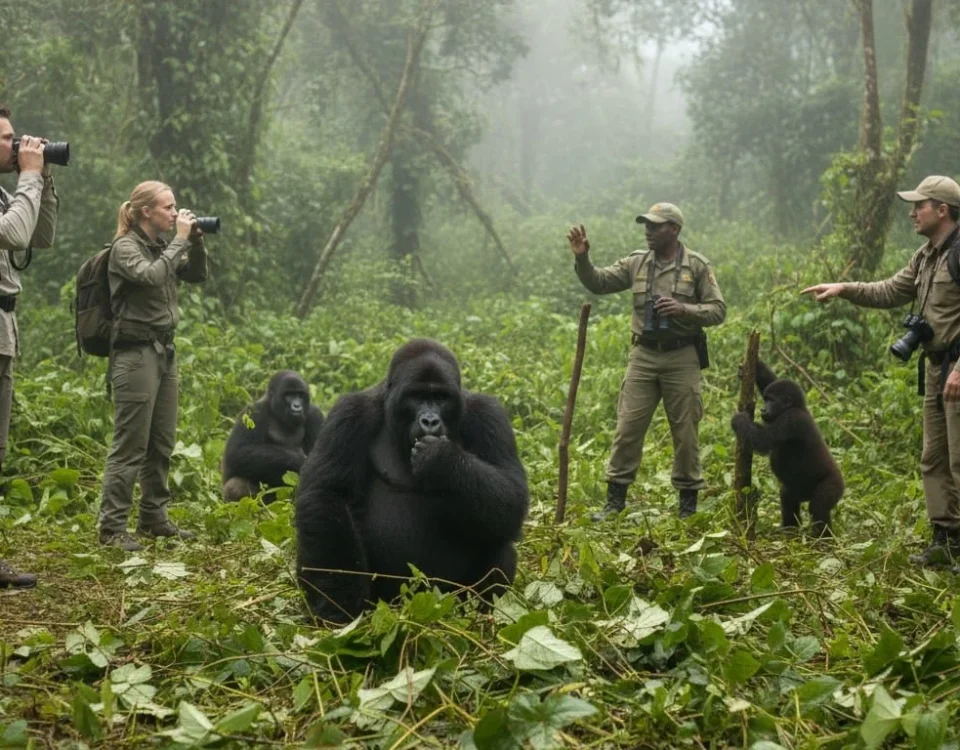
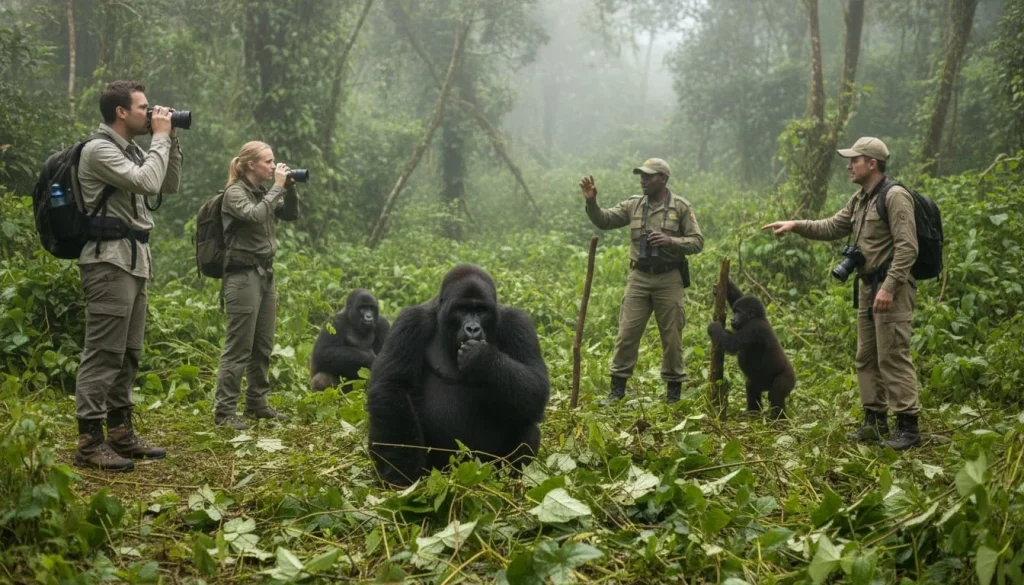
How to Use Walking Sticks Responsibly Near Gorillas
Walking sticks are intended to assist visitors during forest walking.
Once you approach a gorilla family, follow your ranger’s instructions regarding where to place your walking stick.
Never point a walking stick towards a gorilla, wave it unnecessarily or use it to disturb surrounding vegetation near the animals.
Your movements should remain calm and controlled throughout the encounter.
Frequently Asked Questions
Is a walking stick compulsory for gorilla trekking?
No. However, walking sticks are strongly recommended because they provide additional support on uneven, muddy and mountainous forest trails.
Are walking sticks free during gorilla trekking?
Some lodges and safari operators provide complimentary walking sticks. Others may arrange them for a small charge. Confirm arrangements before travelling.
Do physically fit travellers need walking sticks?
Walking sticks can benefit physically fit travellers because slippery surfaces and uneven terrain present challenges regardless of fitness levels.
Can I bring my own trekking poles to Uganda?
Yes. However, check your airline’s baggage requirements because trekking poles may need to be transported in checked luggage.
Are walking sticks necessary during the dry season?
They remain useful because forest trails can contain slippery roots, steep slopes and muddy sections throughout the year.
Are walking sticks suitable for senior travellers?
Yes. Walking sticks may improve balance and confidence, particularly when combined with porter assistance and appropriate trekking arrangements.
Gorilla trekking walking sticks provide practical support when navigating the mountainous forests of Uganda and Rwanda. They improve balance, assist with steep climbs and descents, and may reduce physical strain during extended forest walks.
Whether you choose a traditional wooden walking stick or modern adjustable trekking poles, select equipment that feels comfortable and suits your physical abilities.
Combining a suitable walking stick with waterproof hiking boots, protective clothing and porter assistance can make your mountain gorilla trekking experience considerably more comfortable.