Binoculars and Lenses for an East Africa Safari
Choosing the right binoculars and lenses for an East Africa safari can significantly improve your wildlife viewing and photography experience. Whether you are tracking mountain gorillas in Uganda, observing lions in Kenya’s Masai Mara or photographing migrating wildebeest in Tanzania’s Serengeti, suitable optical equipment helps you appreciate details that are difficult to see with the naked eye.
East Africa offers diverse wildlife habitats, including dense tropical forests, expansive grasslands, wetlands and mountainous landscapes. Each environment presents different viewing distances, lighting conditions and photography challenges.
Binoculars are particularly useful for identifying distant animals, observing birds and studying wildlife behaviour. Camera lenses allow you to capture detailed photographs while maintaining a responsible distance from animals.
You do not necessarily need expensive professional equipment. Choosing suitable magnification, focal lengths, lens apertures and protective accessories can help you enjoy rewarding wildlife encounters throughout your safari.
Best Binoculars and Lenses for an East Africa Safari
The most suitable optical equipment depends on your destination, wildlife interests, photography experience and available luggage space.
| Equipment | Recommended specification | Best use |
|---|---|---|
| General safari binoculars | 8×42 | Wildlife viewing and forest trekking |
| Long-distance binoculars | 10×42 | Savannah wildlife viewing |
| Compact binoculars | 8×32 | Lightweight travel |
| Standard camera lens | 24–70mm | Landscapes and cultural photography |
| Medium telephoto lens | 70–200mm f/2.8 | Gorilla and chimpanzee photography |
| Telephoto zoom lens | 100–400mm | General wildlife photography |
| Super-telephoto lens | 200–600mm | Distant wildlife and birds |
| Wide-angle lens | 16–35mm | Landscapes and environmental photographs |
For most travellers, 8×42 binoculars and a versatile telephoto zoom lens provide a practical starting point.
Understanding Binocular Magnification
Binocular specifications usually contain two numbers, such as 8×42 or 10×50. Understanding these numbers helps you select suitable equipment.
The first number represents magnification. An 8x binocular makes an object appear approximately eight times closer than when viewed with the naked eye.
The second number represents the diameter of the objective lenses in millimetres. Larger objective lenses can collect more light, although they generally increase equipment weight.
| Binocular specification | Magnification | Objective lens diameter |
|---|---|---|
| 8×25 | 8 times | 25mm |
| 8×32 | 8 times | 32mm |
| 8×42 | 8 times | 42mm |
| 10×42 | 10 times | 42mm |
| 10×50 | 10 times | 50mm |
| 12×50 | 12 times | 50mm |
Higher magnification does not automatically mean better wildlife viewing. Powerful binoculars can exaggerate hand movements and make moving animals more difficult to follow.
Best Binoculars for an East Africa Safari
8×42 Binoculars
The 8×42 configuration is one of the most practical choices for general safari travel. It offers a comfortable balance between magnification, brightness, stability and portability.
These binoculars are particularly suitable for gorilla trekking, chimpanzee encounters and forest birdwatching.
Their generally wider field of view makes locating moving animals easier within dense vegetation.
10×42 Binoculars
The 10×42 configuration is particularly useful for wildlife viewing across expansive grasslands.
Travellers visiting Serengeti National Park, Masai Mara National Reserve or Kidepo Valley National Park may appreciate the additional magnification when observing distant animals.
However, holding 10x binoculars steadily can be more challenging, especially inside safari vehicles.
8×32 Binoculars
Compact 8×32 binoculars are suitable for travellers concerned about equipment weight.
They are convenient during extended forest walks and domestic flights with restricted luggage allowances.
However, they may provide less comfortable viewing in poor lighting than larger 8×42 binoculars of comparable optical quality.
10×50 Binoculars
These binoculars offer greater light-gathering potential and useful magnification for observing distant wildlife.
Their main disadvantage is increased weight, making them less convenient during demanding gorilla trekking excursions.
Important Features to Consider When Buying Safari Binoculars
Waterproof and Fogproof Construction
East African safari destinations experience dust, humidity, rainfall and changing temperatures.
Waterproof binoculars provide protection against moisture, while sealed, nitrogen-filled or argon-filled models can help prevent internal fogging.
These features are particularly useful when visiting Bwindi, Kibale and Volcanoes National Park.
Field of View
A wider field of view makes locating and following moving animals easier.
Birdwatchers and visitors observing chimpanzees moving through trees may particularly benefit from binoculars offering a generous field of view.
Eye Relief
Travellers who wear glasses should choose binoculars with sufficient eye relief and adjustable eyecups.
Approximately 15–20mm of eye relief is a useful starting point, although individual comfort varies.
Optical Coatings
Quality lens coatings improve light transmission and reduce unwanted reflections.
Fully multi-coated optics are worth considering when purchasing binoculars for early morning wildlife viewing and shaded forest environments.
Best Camera Lenses for an East Africa Safari
Different wildlife encounters require different focal lengths. Selecting versatile lenses reduces the need to carry excessive equipment.
24–70mm Lens
A 24–70mm lens is suitable for landscapes, accommodation photography, cultural experiences and wider wildlife compositions.
An f/2.8 version is particularly useful in low-light environments.
This lens allows you to capture the surroundings rather than concentrating exclusively on individual animals.
70–200mm Lens
A 70–200mm f/2.8 lens is an excellent option for photographing mountain gorillas in Uganda and Rwanda.
Its wide maximum aperture allows more light to reach the camera sensor, which is particularly valuable beneath dense forest canopies.
It is also useful for photographing elephants, giraffes and other relatively nearby wildlife.
100–400mm Lens
A 100–400mm lens is among the most versatile options for traditional African wildlife photography.
It provides sufficient flexibility for photographing nearby elephants, distant lions and numerous bird species.
Travellers who want to carry only one wildlife lens may find this focal length particularly practical.
150–600mm or 200–600mm Lens
Super-telephoto zoom lenses are particularly suitable for photographing distant wildlife, birds and predators across open grasslands.
They are useful in Serengeti and the Masai Mara, where animals may remain considerable distances from safari tracks.
However, their weight and relatively narrow maximum apertures can make forest photography more challenging.
Recommended Binoculars and Lenses by Safari Destination
| Safari destination | Binoculars | Camera lens |
|---|---|---|
| Bwindi Impenetrable National Park | 8×42 | 70–200mm f/2.8 |
| Volcanoes National Park | 8×42 | 70–200mm f/2.8 |
| Kibale National Park | 8×42 | 70–200mm or 100–400mm |
| Queen Elizabeth National Park | 8×42 or 10×42 | 100–400mm |
| Murchison Falls National Park | 10×42 | 100–400mm |
| Serengeti National Park | 10×42 | 100–400mm or 200–600mm |
| Masai Mara National Reserve | 10×42 | 100–500mm or 200–600mm |
| Amboseli National Park | 10×42 | 100–400mm and wide-angle |
| Mabamba Wetland | 8×42 or 10×42 | 100–600mm range |
Camera lens recommendations assume a full-frame camera. Smaller camera sensors provide narrower fields of view at equivalent focal lengths.
Best Equipment for Gorilla Trekking
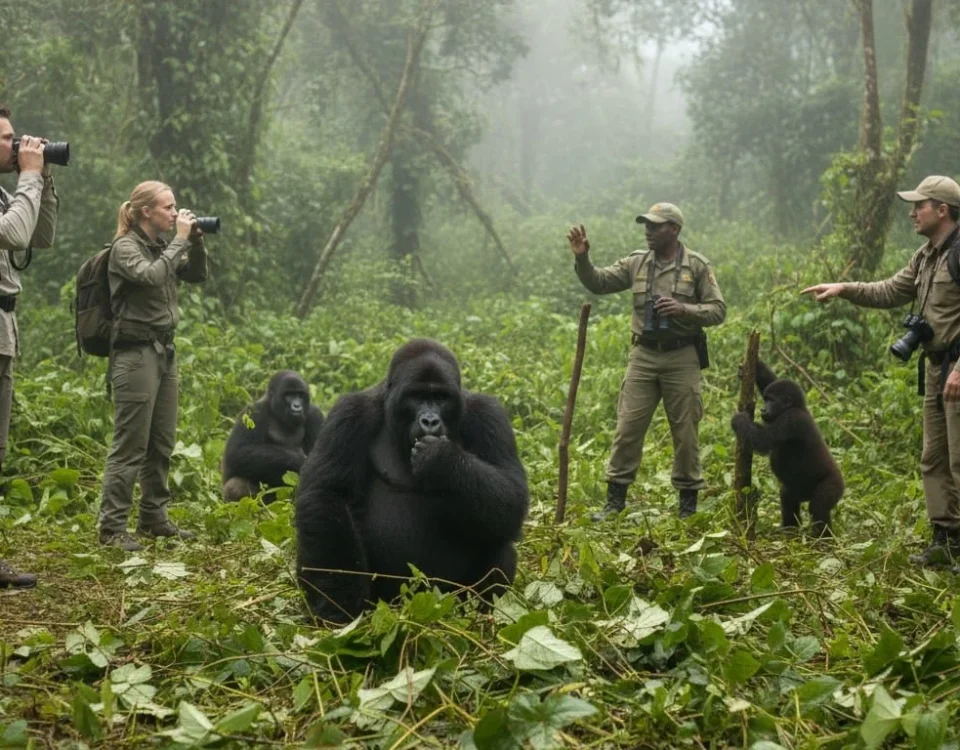
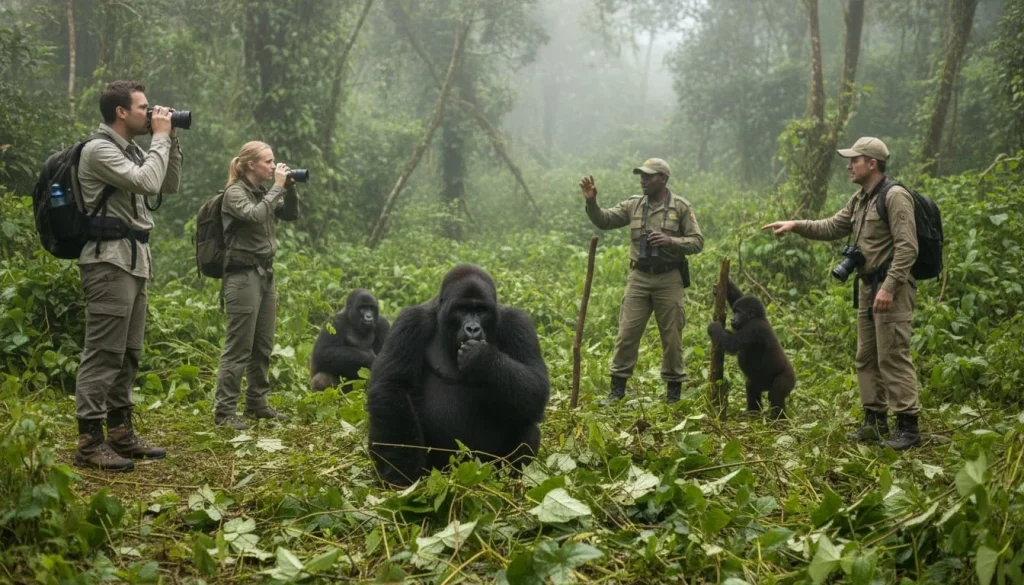
Mountain gorilla photography requires equipment capable of performing in dim forest conditions.
A fast lens with an aperture of f/2.8 or f/4 helps maintain suitable shutter speeds without unnecessarily increasing ISO.
An 8×42 binocular is also useful for observing gorilla facial expressions, feeding behaviour and individuals resting among distant vegetation.
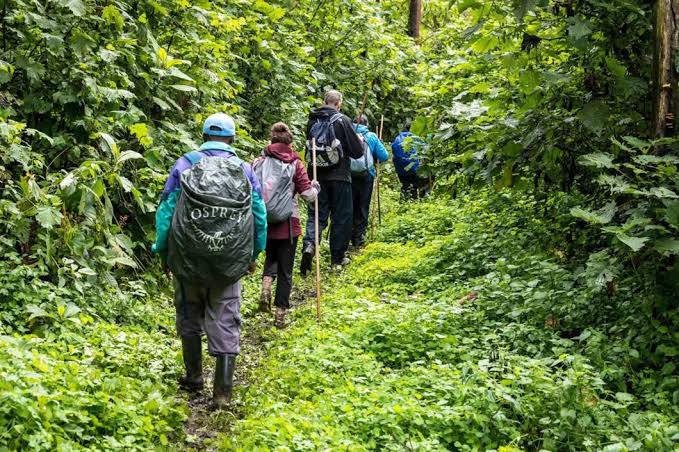
Avoid carrying excessively heavy photography equipment because gorilla trekking may involve several hours of walking.
Flash photography is prohibited during gorilla encounters. Maintain the required viewing distance and follow your ranger’s instructions.
Best Equipment for Birdwatching Safaris
East Africa contains exceptional birdwatching destinations, including Bwindi, Mabamba Wetland, Lake Naivasha and Queen Elizabeth National Park.
An 8×42 binocular is particularly useful for locating birds within dense forest vegetation, while a 10×42 model provides additional magnification across wetlands and open grasslands.
For bird photography, lenses reaching 400mm to 600mm are particularly valuable when photographing smaller or distant species.
Image stabilisation can help reduce camera shake, although fast shutter speeds remain important when photographing birds in flight.
Recommended Safari Equipment Budgets
You can assemble a suitable optical equipment collection according to your available budget.
| Equipment category | Budget range | Midrange | Premium |
|---|---|---|---|
| Safari binoculars | $80–$200 | $200–$600 | $1,000–$3,000 |
| Standard camera lens | $150–$400 | $400–$900 | $1,000–$2,500 |
| Telephoto zoom lens | $300–$700 | $800–$1,800 | $2,000–$4,000+ |
| Camera protection accessories | $30–$80 | $80–$150 | $150–$300 |
These prices are illustrative budgeting estimates. Actual retail prices depend on the manufacturer, camera compatibility, location and available discounts.
Travellers who rarely undertake wildlife photography may find renting expensive lenses more economical than purchasing them.
Protecting Binoculars and Camera Lenses During Safaris
Dust is common during dry-season game drives, while humidity and rainfall present additional challenges during forest trekking.
Keep unused lenses inside a padded camera bag. Avoid changing lenses unnecessarily when travelling along dusty roads.
Carry a lens blower, microfibre cleaning cloth, waterproof camera cover and protective lens caps.
When moving equipment between cold, air-conditioned rooms and humid outdoor environments, allow it to adjust gradually to reduce condensation.
Check domestic airline baggage restrictions before packing multiple camera bodies and heavy lenses.
Common Mistakes When Choosing Safari Optical Equipment
Many first-time safari travellers purchase binoculars with excessively high magnification, making handheld wildlife observation difficult.
Others carry too many camera lenses, creating unnecessary luggage weight and increasing the frequency of lens changes.
Buying equipment shortly before departure without practising is another common mistake.
Spend time learning how to adjust binocular focus, operate camera autofocus and change exposure settings before travelling.
Frequently Asked Questions
Are 8×42 or 10×42 binoculars better for an African safari?
The 8×42 configuration is generally more versatile, while 10×42 binoculars are particularly useful for distant wildlife across open grasslands.
Is a 300mm lens enough for an African safari?
Yes. A 300mm lens is suitable for many wildlife encounters, although longer focal lengths provide greater flexibility when photographing distant animals and small birds.
Should every safari traveller carry binoculars?
Ideally, each traveller should have their own binoculars to avoid missing wildlife sightings while sharing equipment.
What is the best lens for gorilla photography?
A 70–200mm f/2.8 lens is particularly suitable because of its versatile focal length and excellent low-light performance.
Can I use my smartphone instead of a camera?
Yes. Smartphones are useful for landscapes, accommodation photographs and nearby wildlife. Dedicated telephoto lenses generally provide better results when photographing distant animals.
Is a tripod necessary for an East African safari?
Not usually. A camera beanbag, monopod or image-stabilised lens may be more practical inside safari vehicles.
Choosing suitable binoculars and lenses for an East Africa safari depends on your wildlife interests, budget and preferred destinations. The 8×42 binocular configuration offers excellent versatility, while 10×42 binoculars provide additional magnification for open savannah environments.
A 70–200mm lens is particularly useful for gorilla photography, while a 100–400mm lens provides excellent flexibility during traditional wildlife safaris.
Select comfortable, reliable equipment, practise using it before departure and protect your optics against dust and moisture throughout your East African adventure.