How rangers track gorillas each morning in the rainforest
Every morning in Bwindi Impenetrable National Park, Uganda, teams of experienced trackers enter the rainforest before most visitors begin their gorilla trekking experience. Their mission is to locate the habituated mountain gorilla families, observe their movements and communicate their latest positions to the ranger guides waiting at the park headquarters.
By the time visitors finish breakfast and attend the morning briefing, trackers may already have spent several hours walking through steep valleys, thick vegetation and muddy forest trails. They follow clues left by the gorillas, including abandoned sleeping nests, broken branches, feeding remains and fresh dung. Their knowledge of individual gorilla families helps them interpret these signs and work out where the animals have moved.
This daily operation is essential to gorilla tourism in Uganda. Without trackers, visitors would have to search the enormous rainforest themselves, making each trek considerably more difficult and unpredictable.
The process combines traditional forest knowledge, years of experience, careful observation and communication technology. It also contributes to conservation by allowing park teams to monitor the health, movements and behaviour of habituated gorilla families throughout the year.
Why gorillas must be tracked every morning
Mountain gorillas do not remain in one location throughout the day. They move through the forest searching for food, resting, interacting with other family members and selecting suitable places to sleep.
Their movements depend on several factors, including food availability, weather conditions, interactions with neighbouring gorilla groups and the structure of their home range. A family may feed along one forest ridge in the afternoon and move into a different valley before settling down for the night.
Because gorillas move naturally, knowing where a family was found the previous afternoon does not guarantee that it will remain nearby the following morning.
Trackers therefore locate each habituated family again before visitors enter the forest. They establish where the group slept, identify the direction it travelled after waking and follow the latest signs until they find the animals.
This daily routine helps park authorities organise visitors into appropriate trekking groups. It also allows trackers to monitor whether the gorillas appear healthy and whether anything unusual has happened within the family.
What time do gorilla trackers enter Bwindi Forest?
Tracking usually begins early in the morning, often before the official visitor briefing. The exact departure time depends on the sector, the location of the gorilla family and the daily monitoring arrangements.
Trackers commonly start from the place where they last observed the family the previous afternoon. They carry communication equipment, GPS devices, field supplies, drinking water and suitable clothing for working in a wet tropical rainforest.
The forest is often cool and damp in the early morning. Mist may cover the hills, vegetation carries overnight moisture and visibility can be limited beneath the dense canopy.
Trackers must be prepared for difficult conditions. They may encounter steep slopes, slippery roots, thick vines, stinging vegetation and muddy ground. Rain can begin at any time, even during periods generally considered dry.
Their work continues regardless of whether tourists have booked permits for that particular day. Habituated gorilla families require regular monitoring, and conservation teams cannot stop following them simply because visitor numbers are low.
The first clue: Where the gorillas slept the previous night
One of the most important parts of morning tracking begins at the previous night’s nesting site.
Mountain gorillas build sleeping nests from vegetation. They collect leaves, branches and other suitable plant material to create individual resting places. Most members of a family construct their own nests, while very young infants may sleep with their mothers.
Unlike many animals that repeatedly use the same sleeping location, gorillas generally build fresh nests each evening. These nests provide trackers with valuable information about where a family spent the night.
When trackers arrive at a known nesting site, they examine the area carefully. They look for the number of nests, their condition, the presence of fresh dung and signs showing when the gorillas left.
The arrangement of the nests can also help them identify the group. A collection of fresh nests in one location suggests that several family members slept together.
The trackers then search for the trail leading away from the nesting site. This becomes the starting point for following the family through the forest.
How trackers read gorilla footprints and forest trails
The forest floor contains many signs of animal movement. Experienced trackers learn to recognise the marks left by gorillas and distinguish them from signs made by other wildlife.
Footprints may appear in soft soil, wet mud or exposed ground. Their size and shape can provide clues about the direction of movement and the approximate size of the animal.
However, footprints are not always easy to find. Thick vegetation, fallen leaves and rocky ground can hide them. Heavy rainfall may also wash away visible impressions.
Trackers therefore combine several clues instead of depending on one sign.
They examine flattened vegetation, disturbed leaves, broken stems and branches pushed aside as the gorillas moved through the undergrowth. A family feeding in one area may leave a noticeable trail of damaged plants and discarded vegetation.
The direction of these marks helps trackers establish where the gorillas travelled. They also pay attention to the freshness of the disturbance. A recently broken stem may still have moist plant tissue, while older damage may have dried or changed colour.
Following these signs requires patience. Trackers sometimes move slowly through an area, examining several possible routes before deciding which direction to follow.
Feeding remains reveal where gorillas have been
Mountain gorillas spend a large part of their day feeding. Their diet includes leaves, stems, shoots, fruits and other forest vegetation.
As they move through the rainforest, they leave evidence of their feeding activities. Trackers examine discarded plant material, broken stems, stripped vegetation and partially eaten plants.
Certain feeding signs can help identify the direction in which a family has moved. If fresh feeding remains appear along a trail, trackers can follow the disturbance deeper into the forest.
They also develop familiarity with the feeding preferences and movement patterns of individual families. This knowledge helps them understand which areas the gorillas are likely to visit under different conditions.
Bwindi’s vegetation changes across different elevations and forest habitats. Food availability can influence where gorillas spend their time, so trackers need to understand both the animals and the environment.
Recognising feeding signs is particularly important when a family moves through thick vegetation where footprints are difficult to see.
Fresh dung provides important tracking information
Gorilla dung is another useful clue. Trackers examine its appearance, location and freshness to establish whether the animals passed through an area recently.
Gorillas generally defecate near their sleeping nests before leaving in the morning, although dung can also be found along feeding and movement routes.
Fresh dung helps trackers confirm that a group has recently occupied an area. Combined with abandoned nests and feeding remains, it can indicate how long ago the gorillas moved away.
Researchers also use dung for conservation work. Samples can provide information about diet, health and genetic relationships. During population surveys, genetic analysis helps identify individual gorillas and improve estimates of population numbers.
Trackers do not rely on dung alone to locate a family. They use it alongside other evidence because different animals may use the same forest areas.
Listening for gorilla sounds in the forest
Mountain gorillas communicate through different vocalisations and physical behaviours. Their sounds include grunts, calls, growls and other forms of communication.
Experienced trackers become familiar with these sounds and may use them as additional clues when searching for a family.
The forest can carry sounds over considerable distances, particularly when the surrounding environment is relatively quiet. A tracker who recognises gorilla vocalisations may identify the approximate direction of a group before finding visible signs.
However, hearing a sound does not always reveal the exact location of the family. Dense vegetation can make it difficult to determine how far away the animals are.
Trackers also listen for movement in the vegetation. Branches breaking, leaves rustling and vegetation shifting can indicate that large animals are nearby.
They must interpret these sounds carefully because other wildlife and natural forest activity can produce similar noises.
Do gorillas wear GPS tracking collars?
A common question among visitors is whether rangers locate gorillas using electronic collars or implanted tracking devices.
Bwindi’s habituated mountain gorilla families are generally located through daily human tracking rather than routine GPS or radio collars fitted to the animals.
Trackers use handheld GPS devices to record locations and communicate information about the forest. These devices help conservation teams document where families are found and understand their movement patterns over time.
Radios and other communication equipment connect trackers with ranger guides and park staff. This allows the team in the forest to share location information without requiring visitors to search blindly.
Technology supports the tracking process, but it does not replace the experience and knowledge of the people following the gorillas.
There are also important conservation reasons for limiting unnecessary contact with the animals. Capturing and fitting devices to wild gorillas can involve risks, so monitoring methods are selected carefully by conservation authorities and research teams.
How trackers identify individual gorilla families
Bwindi has several habituated gorilla families distributed across four main trekking sectors: Buhoma, Ruhija, Rushaga and Nkuringo.
Trackers often become familiar with particular families because they monitor them regularly. They learn their home ranges, preferred feeding areas, nesting locations and typical movement patterns.
This knowledge makes daily tracking more efficient. A tracker who has followed a family for many years may recognise its usual routes and understand how it responds to changes in the forest.
However, gorilla families do not follow fixed daily schedules. They may move into unfamiliar areas, encounter another group or spend more time feeding in a particular location.
Trackers must therefore remain observant rather than assume that a family will follow its usual route.
They also identify individual gorillas using distinguishing physical characteristics. These may include facial features, body size, scars, nose patterns and other visible differences.
Individual identification helps conservation teams monitor family membership and recognise changes involving births, deaths, injuries and leadership.
How trackers communicate with ranger guides
Once trackers locate a gorilla family, communication becomes essential.
The trackers use radios or other available communication equipment to contact the ranger guides and park teams responsible for organising visitors.
They provide information about the family’s location, the direction of movement and the best route for reaching the group. They may also report whether the gorillas appear settled or are continuing to move through the forest.
The ranger guides then use this information to lead visitors towards the family.
Communication can continue during the trek. If the gorillas move into another valley or change direction, trackers can update the guides so that visitors follow the correct route.
This explains why your trekking route may change several times during the morning. The ranger is responding to information from the tracking team rather than following a fixed walking trail.
The trackers and guides work together to make the encounter possible while following conservation and visitor safety requirements.
Why trackers often find the gorillas before tourists arrive
Trackers usually enter the forest before visitors because they need time to locate the family and establish its current position.
By the time tourists attend the morning briefing, the tracking team may already have followed the gorillas for some distance.
This arrangement reduces the amount of searching visitors need to do. Instead of beginning with no information, the ranger guide receives an updated location and directs the trekking group towards the family.
However, the tracker may not always have found the gorillas before visitors set off. If a family has moved a considerable distance or the trail is difficult to follow, the tracking team may still be searching when the tourists begin their trek.
In such situations, visitors may join the search with their guide, following information from the trackers as it becomes available.
How long does it take to find a gorilla family?
The time required to locate a family varies considerably.
Some groups may be found within 30 minutes of leaving the starting point. Others may require several hours of walking through steep and difficult terrain.
The distance depends on where the gorillas slept, how far they moved after waking and the direction they took while searching for food.
Weather also affects the process. Heavy rain can wash away footprints, flatten vegetation and make older feeding signs harder to distinguish from fresh ones.
The gorillas may also change their route after encountering another family. Interactions between groups can cause them to move away from an area or separate temporarily.
This is why a gorilla trek should never be planned around a guaranteed walking time. Even when trackers know the family’s general location, reaching it can require considerable effort.
Visitors should prepare for both short and demanding walks.
What happens when trackers lose the gorilla trail?
Even experienced trackers sometimes lose the trail. Bwindi’s vegetation is dense, and the terrain can make it difficult to follow every movement.
Heavy rain is one of the main challenges. Water can wash away footprints and make broken vegetation harder to identify. A family moving through thick undergrowth may also leave signs that are difficult to distinguish from natural damage.
When trackers lose the trail, they usually return to the last point where they confirmed the gorillas’ movements. They examine the surrounding vegetation and search for additional signs.
Team members may spread out carefully to investigate different possible directions while maintaining communication with one another.
They use their knowledge of the terrain and the family’s previous movements to narrow down the search area.
Losing a trail does not mean the trackers have failed. It is part of working with wild animals that move freely through a complex rainforest.
What if a gorilla family moves into a different valley?
Gorilla families can cover considerable distances while searching for food. A group that slept on one hillside may move into a neighbouring valley before visitors reach it.
When this happens, trackers update the ranger guides with the latest information. The guides may change the walking route or approach the family from a different direction.
This can make the trek longer than expected, particularly in sectors with steep slopes and thick vegetation.
The trackers must also consider the position of other gorilla families. When groups meet, their interactions may influence their movements and make it harder to predict where they will go next.
Visitors should follow the ranger’s instructions and avoid trying to find the gorillas independently. The tracking team coordinates the search to minimise disturbance and maintain safe access.
How tracking supports gorilla conservation
Morning tracking is important for tourism, but it also plays a major role in conservation.
Daily monitoring allows park teams to observe the health and behaviour of habituated gorillas. Trackers may notice injuries, unusual movements, changes in family membership or signs that an individual is unwell.
They can report these observations to conservation authorities and veterinary teams when further attention is necessary.
Monitoring also helps researchers understand how gorilla families use the forest. Information about their movements, feeding areas and nesting sites contributes to long-term studies of mountain gorilla behaviour.
Trackers may also report signs of illegal activity, including snares, traps, unauthorised entry and other threats to wildlife.
Their presence helps strengthen protection within the forest. By spending time in the same areas as the gorillas, they can identify potential problems and alert park authorities.
The information collected through regular monitoring contributes to the wider conservation programme protecting mountain gorillas in Uganda.
The role of local communities in gorilla tracking
Many people working as trackers and tourism staff around Bwindi come from communities neighbouring the park.
Their knowledge of the local landscape and forest conditions is valuable. Some have spent many years following gorilla families and understand the terrain in considerable detail.
Employment in tourism provides income and creates a direct connection between community livelihoods and wildlife conservation.
Local people also contribute to reporting wildlife movements and potential threats around the park. Their involvement helps reduce conflict and encourages communities to participate in protecting the forest.
The relationship between conservation and local communities remains important because Bwindi’s long-term protection depends on cooperation beyond the park boundary.
Gorilla tourism supports this relationship through employment, visitor spending and community development initiatives funded partly through conservation revenue.
What happens when tourists finally meet the gorillas?
Once the ranger guide receives confirmation of the family’s location, the trekking group follows the route towards the animals.
Trackers may remain with the gorillas while visitors approach. Their continued presence helps monitor the family’s behaviour and provides updated information to the guide.
When the group reaches the gorillas, the ranger explains where visitors should stand and reminds everyone to follow the viewing rules.
For standard gorilla trekking, visitors are allowed up to one hour with the family after locating it. They must maintain the required distance, avoid touching the animals and follow instructions from the ranger.
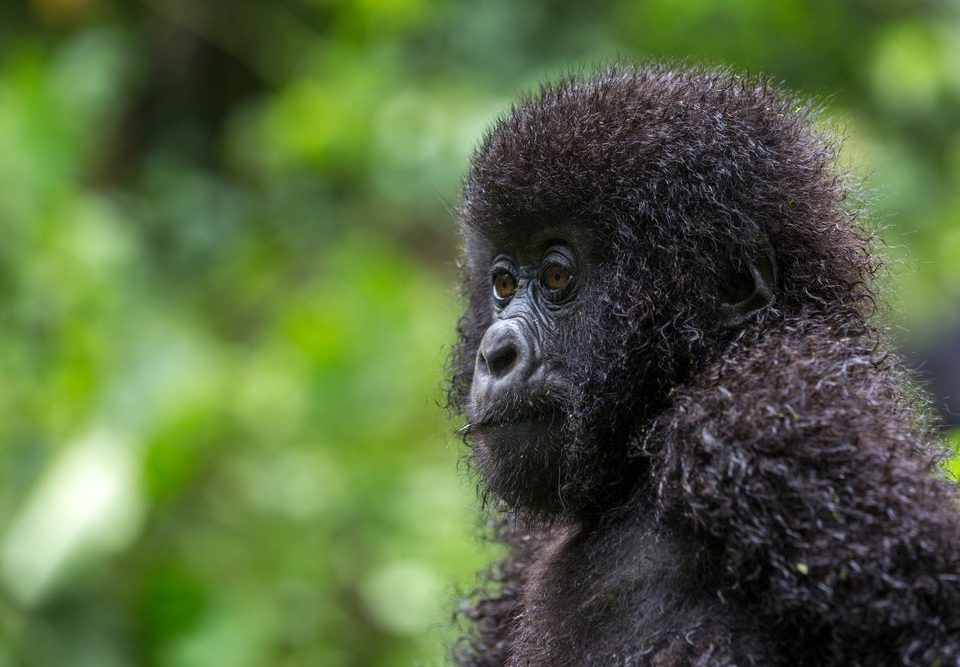
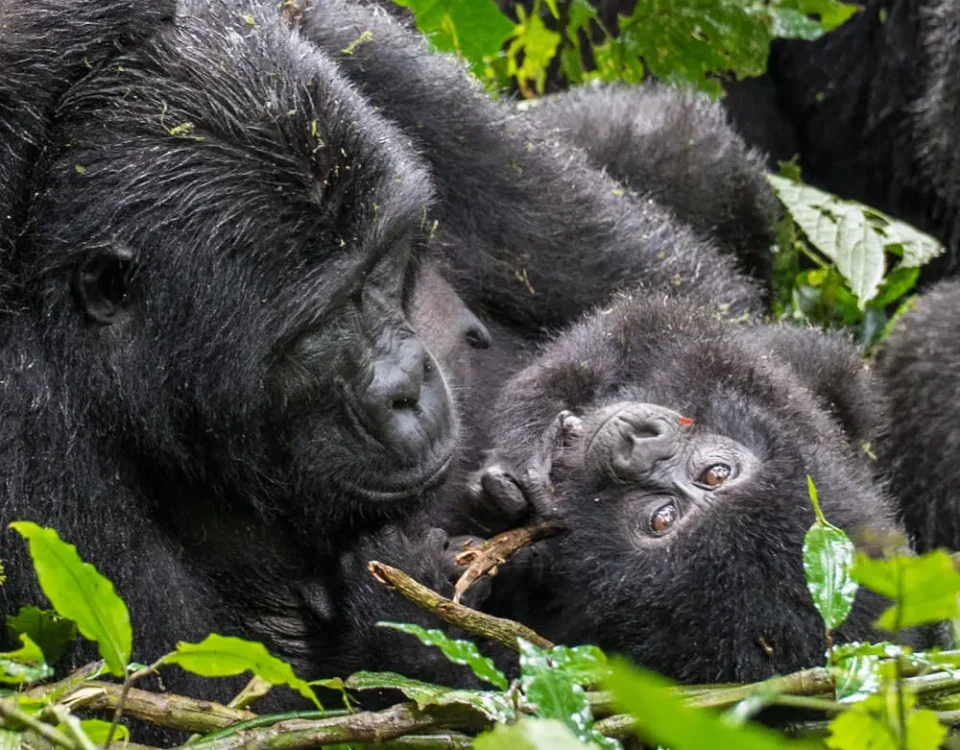
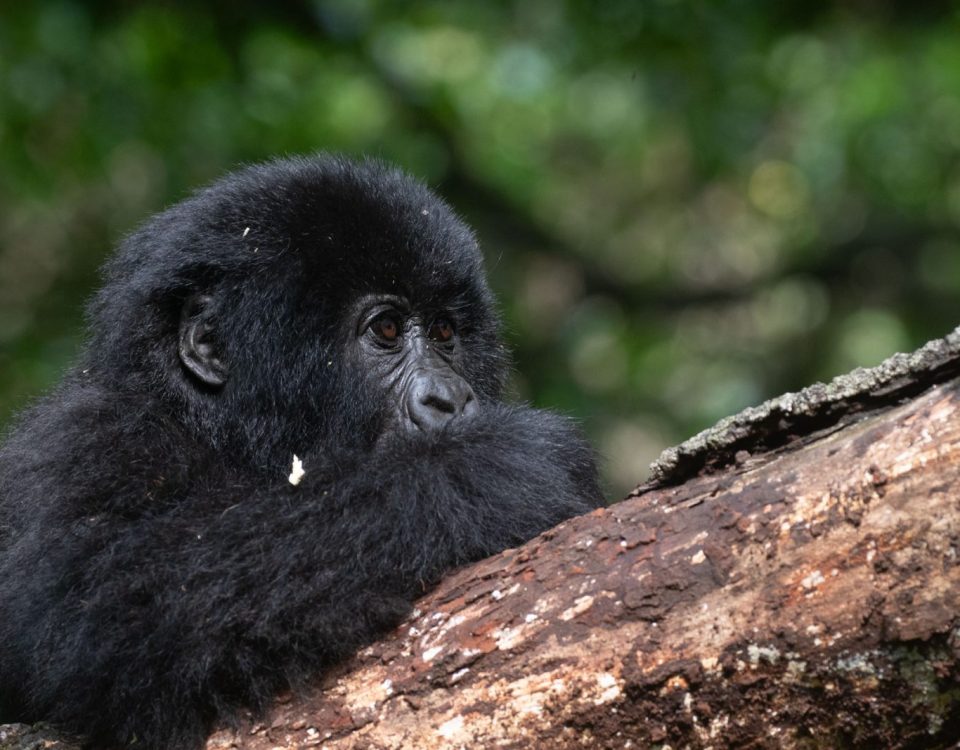
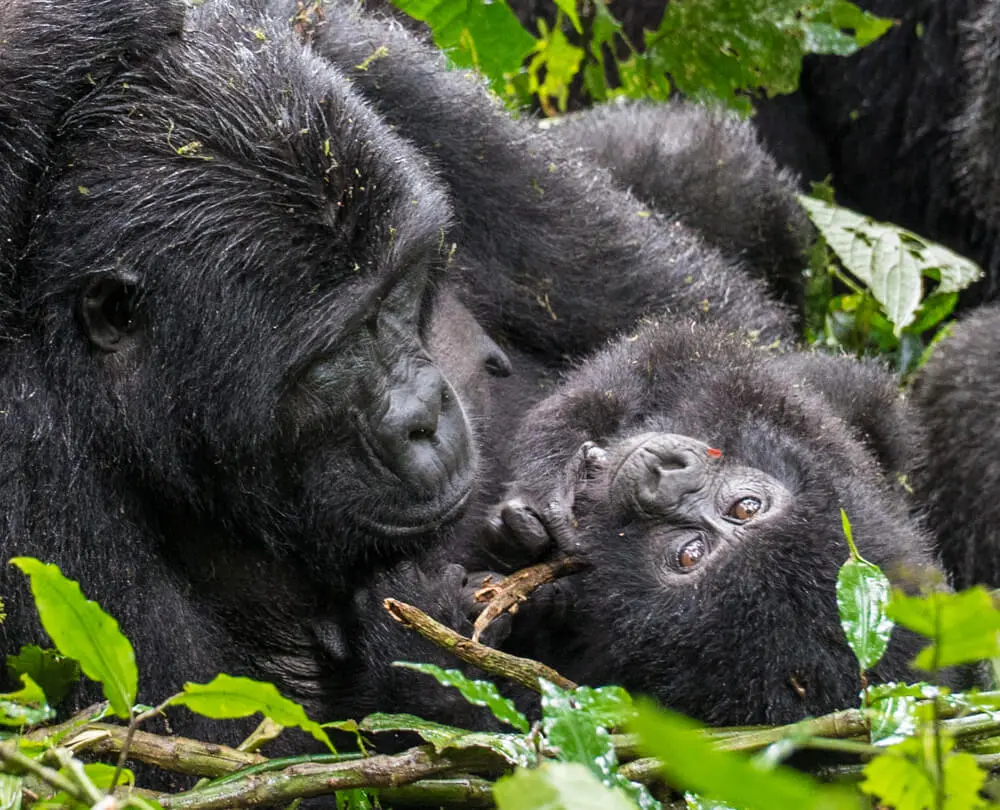
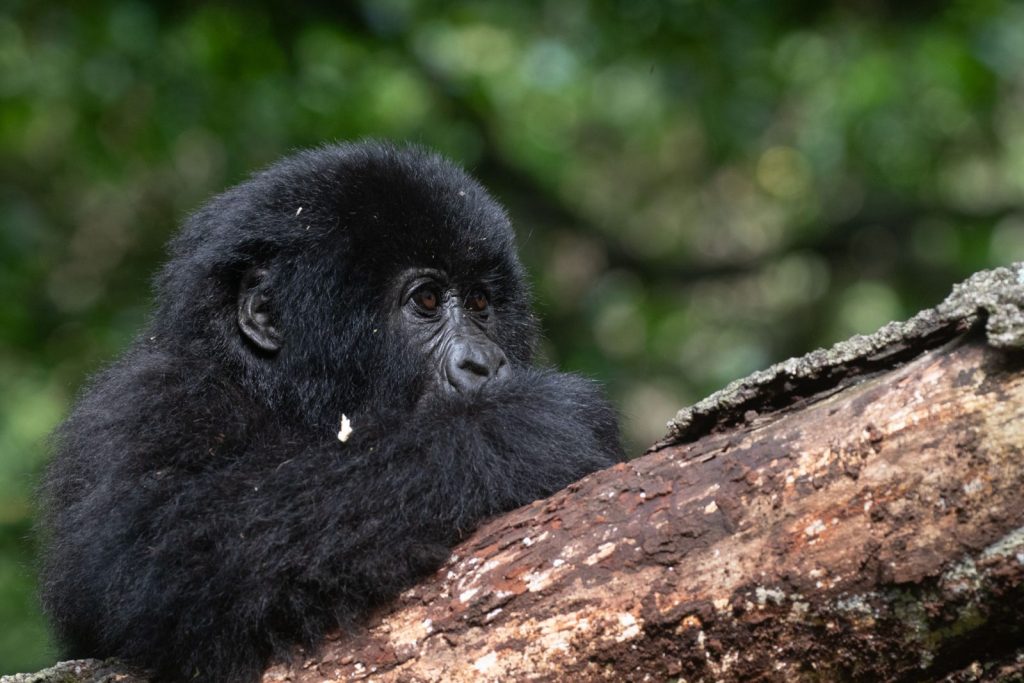
During this time, the gorillas continue their natural activities. You may see a silverback resting, females feeding, infants staying close to their mothers or juveniles playing among the vegetation.
The trackers continue observing the family and help ensure that the encounter remains controlled.
Visitors may see only a small part of the work involved in locating the gorillas, but the encounter depends on the hours of preparation completed before they enter the forest.
What equipment do gorilla trackers carry?
Trackers work in challenging rainforest conditions and need equipment that supports communication, navigation and personal safety.
Their equipment varies depending on their responsibilities and the sector in which they work, but commonly includes:
- Handheld GPS devices: Used to record locations and help teams understand gorilla movements.
- Two-way radios: Used to communicate with ranger guides and other tracking teams.
- Rain jackets and waterproof clothing: Essential for working in Bwindi’s frequently wet conditions.
- Sturdy boots: Provide grip and protection on muddy, steep and uneven trails.
- Field notebooks or recording equipment: Used to document observations and monitoring information.
- First aid supplies: Help teams respond to minor injuries and emergencies.
- Water and food: Necessary for long periods in the forest.
- Machetes or suitable cutting tools: Used by authorised staff when vegetation needs to be cleared along a route.
Trackers must carry only the equipment needed for their work because they may spend several hours walking through difficult terrain.
Frequently asked questions about morning gorilla tracking
Do rangers track gorillas every day?
Yes. Habituated gorilla families require regular monitoring throughout the year. Tracking teams work even when there are few or no tourists visiting the park.
Do trackers follow gorillas at night?
Routine tourist tracking does not involve following families throughout the night. Trackers generally return to the last known location or the previous day’s nesting area the following morning and continue the search.
How do trackers know where gorillas slept?
Trackers use information from the previous day’s observations. They return to the known area and look for fresh nests, which gorillas usually construct each evening.
Can trackers find gorillas without GPS?
Yes. They rely heavily on their knowledge of the forest and the physical signs left by gorillas. GPS devices support navigation and record-keeping, but they do not replace traditional tracking skills.
Are gorillas fitted with tracking collars?
Bwindi’s habituated mountain gorillas are generally located through daily observation and ground tracking rather than routine GPS or radio collars.
How far can trackers walk in one morning?
There is no fixed distance. The amount of walking depends on the family’s movements, the terrain and the difficulty of following its trail. Some searches take less than an hour, while others require several hours.
Do tourists follow the trackers directly?
Visitors are normally led by their assigned ranger guide, who receives information from the trackers. The route may change as the trackers report the family’s latest position.
What happens if the trackers cannot find a gorilla family?
The team continues searching using the available evidence and communicates with other park staff. Although habituated gorilla sightings are highly reliable because of daily monitoring, a sighting should not be described as an absolute guarantee.
The people behind every successful gorilla trek
A gorilla trekking experience in Bwindi begins long before visitors enter the rainforest. While tourists prepare their cameras, boots and walking sticks, trackers are already working through the forest to locate the gorilla families.
They read abandoned nests, examine broken vegetation, follow feeding remains and interpret signs that many visitors would overlook. They also communicate with ranger guides and monitor the animals to support conservation.
Their work requires physical endurance, patience, detailed forest knowledge and years of experience. Every successful encounter depends on this daily effort.
When you finally stand in front of a mountain gorilla family, remember that the experience began with the people who entered the forest early that morning. Their knowledge and dedication make it possible to observe these remarkable animals while protecting their natural home.