Kenya’s Top Safari Locations
Kenya is one of the most visited safari countries in East Africa. It offers classic savannah game drives, birdwatching around the Rift Valley lakes, and mountain scenery further north. The landscape ranges from open grassland and acacia woodland to freshwater and soda lakes, with the snow-capped peak of Mount Kilimanjaro visible just across the border. Few countries in the region pack this much variety into destinations that combine so easily on one trip.
This guide covers the best places to go on a Kenya safari, from elephants in Amboseli to flamingos at Lake Nakuru and the wildebeest great migration through the Maasai Mara. You can visit each park on its own for a shorter trip, or link them into a longer circuit, since the distances between them are manageable by road or a short domestic flight. A common route connects Nairobi, Lake Nakuru, the Maasai Mara, and Amboseli in a loop lasting a week to ten days, giving enough time at each stop for more than a single rushed game drive.
Maasai Mara National Reserve
The Maasai Mara is Kenya’s most visited national reserve. It holds the Big Five: lion, elephant, leopard, buffalo, and rhino, alongside cheetah, hyena, giraffe, and large herds of plains game. Guides based in the reserve know the resident prides individually, so tracking wildlife stays productive even outside migration season. A typical day starts with an early game drive while the air is cool and animals are active. A midday rest comes next, then a second drive as temperatures drop in the late afternoon.
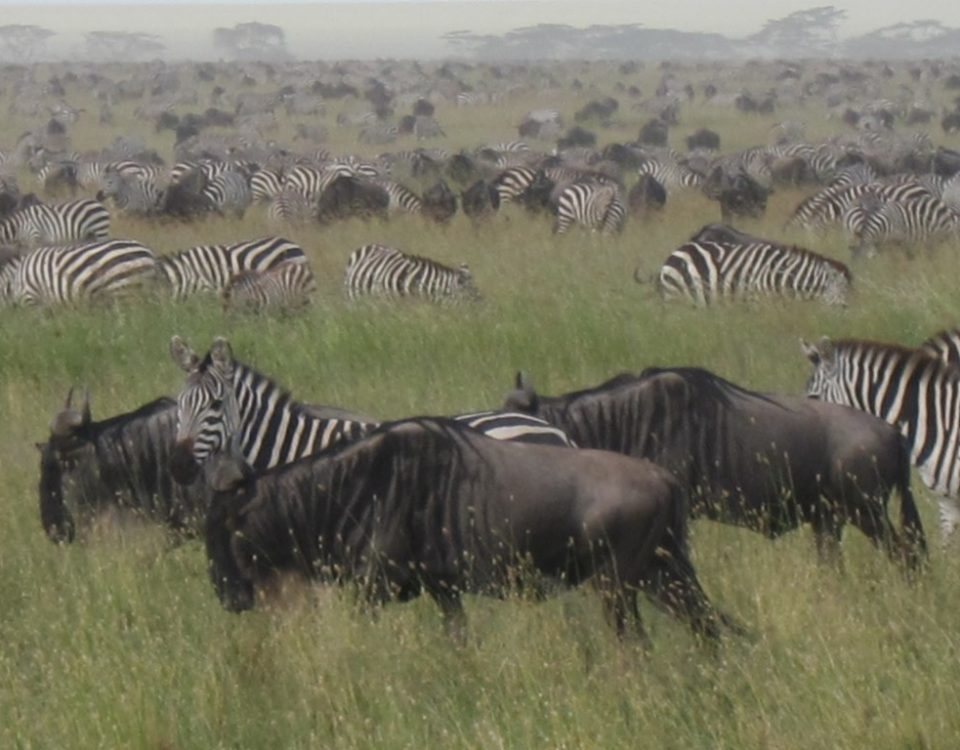
July through October is when the reserve is most thrilling. Every year in this window, over a million wildebeest and hundreds of thousands of zebra and gazelle migrate north from Tanzania’s Serengeti in search of fresh grazing. Exact crossing dates shift with the rains, so no guide can promise a fixed date. Outside these months the Mara stays quieter, but resident lion, leopard, and elephant remain present year-round, and the open terrain makes spotting them easier than in more densely wooded parks.
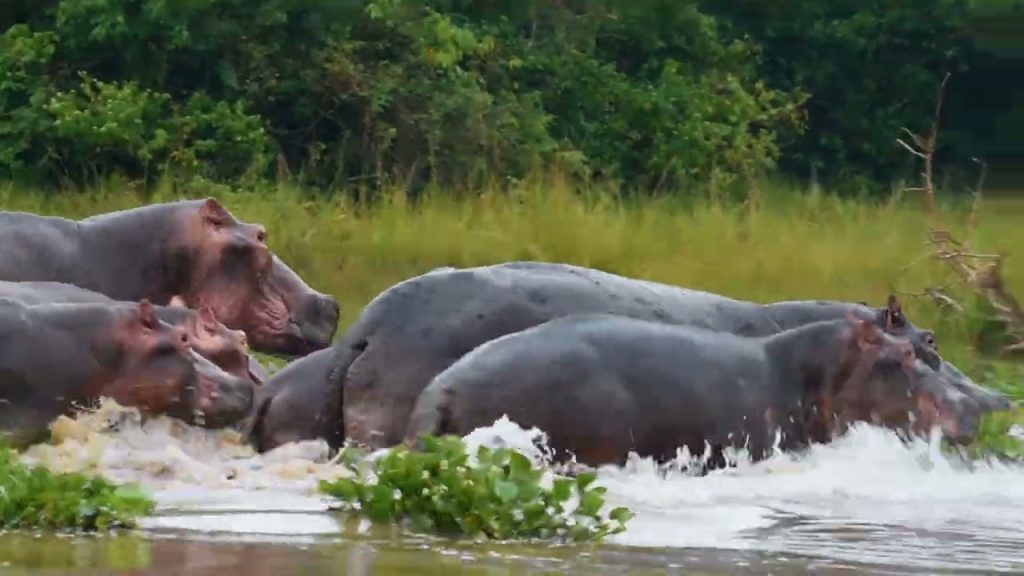
The river crossings themselves are the migration’s signature moment. Herds gather nervously along the bank until a single animal breaks and the rest follow in a chaotic rush, sometimes losing individuals to the current or to waiting crocodiles. Guides often position vehicles at known crossing points ahead of time, since no one can predict exactly when a herd will commit to the water. Some visitors wait at one crossing for hours; others keep moving and take in general game viewing across the wider plains instead.
Lake Nakuru National Park
Lake Nakuru is best known for its flamingos, though that’s not the only reason to visit. The lake’s shallow, alkaline water and surrounding acacia woodland support more than 500 recorded bird species, from resident woodland birds to seasonal migrants. Flamingo numbers themselves shift year to year with water levels and algae availability, so travelers hoping specifically for large flocks should check recent conditions before planning around them.
Beyond birdlife, the park holds elephant, lion, waterbuck, and one of Kenya’s most reliable rhino populations, which a fenced perimeter protects by keeping poaching pressure low. Nakuru is also compact compared to the Mara, so a single day’s game drive can realistically cover most of its habitat, from lakeshore to woodland to rocky outcrop.
Amboseli National Park
Amboseli holds the Big Five alongside giraffe, impala, eland, gazelle, and cheetah, but it’s best known for its elephant herds. Researchers have studied and identified some individuals here for decades, part of one of the longest-running elephant research programs in Africa. The park’s flat, open terrain and short grass make elephants and other large mammals easier to spot and photograph than in more wooded reserves.
Amboseli’s other signature draw is Mount Kilimanjaro itself, Africa’s highest peak, visible rising behind the plains on a clear day. Photographs pairing elephants in the foreground with the snow-capped mountain behind them are among the most recognizable images to come out of an East African safari. Together, the Mara, Nakuru, and Amboseli give travelers three distinct reasons to visit Kenya, and many itineraries combine all three into a single circuit covering the migration, Rift Valley birdlife, and Amboseli’s elephants in one trip. Several tour operators run standard routes linking the three parks, so the logistics don’t need to be arranged from scratch.
Recommended Tours: 3 Days Masai Mara Big Five Safari | 4 Days Masai Mara & Lake Nakuru Big Five Safari