
Ranking fear is an inherently subjective exercise, since what terrifies one traveller barely registers as a passing thrill for another, but after covering East Africa’s full range of adventure activities in detail across this section, a genuine pattern emerges around which experiences demand the most in terms of physical risk, technical skill, and sheer nerve. Extreme adventure sports in East Africa ranked from most to least intense gives newcomers to the region’s adrenaline scene a starting point for deciding where their own tolerance for risk actually sits, and offers seasoned thrill-seekers a checklist against which to measure how much of the region’s full range they’ve genuinely covered, from a single afternoon’s guided novelty to a multi-day commitment demanding real skill and preparation.
How This Ranking of Extreme Adventure Sports Was Built
Rather than relying on marketing claims or a single reviewer’s personal fear response, this ranking of extreme adventure sports in East Africa weighs several factors together: the physical demands an activity places on participants, the technical skill genuinely required to attempt it safely, the consequences of something going wrong, and the sheer psychological intensity of the experience itself, whether that intensity arrives as a single sharp spike or builds steadily across a sustained effort. Activities scoring highly across most or all of these factors sit toward the top of the list, while those demanding real commitment in only one or two areas, but remaining broadly accessible and well-supervised, rank further down despite still delivering a genuine thrill.
1. Skydiving Over Tanzania’s Skies
Freefall from over 10,000 feet sits at the top of almost any reasonable ranking of pure physical intensity, and Tanzania’s established dropzones around Arusha and Zanzibar deliver genuine freefall thrills against some of the most striking scenery available to any skydiving destination worldwide. The combination of altitude, speed, and the simple psychological weight of stepping out of an aircraft door puts this firmly at the extreme end of the region’s adventure offering, regardless of how professionally managed the tandem experience itself is.
2. White-Water Rafting the Nile at Jinja
Grade five rapids on the Nile at Jinja offer sustained, genuinely violent whitewater that has built the town’s international reputation as East Africa’s adventure capital over more than two decades. Unlike a single dramatic moment, rafting demands sustained physical effort and nerve across an entire multi-hour run, with each major rapid bringing a fresh wave of adrenaline rather than a single climactic drop.
3. Bungee Jumping at the Source of the Nile
The bungee jump near Jinja’s bridge over the Nile delivers concentrated, pure freefall terror in a way few other activities on this list can match, a genuine free-fall toward the river below before the cord catches, all compressed into a matter of seconds rather than the sustained effort rafting or climbing demand. It ranks highly here specifically for intensity per minute rather than overall physical demand.
4. Rock Climbing East Africa’s Volcanic and Basalt Routes
Technical multi-pitch climbing at Kenya’s Hell’s Gate or Uganda’s remote Karamoja granite demands sustained physical strength, genuine technical skill, and a level of exposure that builds steadily rather than delivering a single adrenaline spike, placing it firmly among the region’s more serious commitments for anyone without prior climbing experience.
5. Off-Road 4×4 Adventure Driving Through Remote Terrain
The risk profile here differs from the purely physical activities above it, less about a single moment of fear and more about sustained self-reliance across genuinely remote terrain where a mistake or breakdown carries real consequences given the distance from help. It demands preparation and skill more than raw nerve, but the stakes involved keep it solidly in the upper half of this ranking.
6. Paragliding Above the Rift Valley
Ridge-soaring at Kenya’s Iten demands genuine skill for solo pilots, though tandem flights soften the experience considerably for passengers, making the intensity here highly dependent on whether a visitor is flying solo or riding tandem with an experienced pilot handling the technical work.
7. Motorcycle Touring Rough Regional Terrain
Sustained rather than acute risk defines multi-day motorcycle touring across mixed paved and unpaved routes, where the danger comes less from any single dramatic moment and more from the accumulated exposure of covering hundreds of kilometres on two wheels across unpredictable road conditions over consecutive days.
8. Zip-Lining and Canopy Tours
Height and speed combine at sites like Bwindi’s forest canopy course to deliver a genuine, if brief, adrenaline spike, but the controlled, harnessed nature of a well-run zip-line course keeps actual risk considerably lower than the activities ranked above it, making this an accessible entry point for travellers building toward more serious activities.
9. Kitesurfing Zanzibar’s Trade Winds
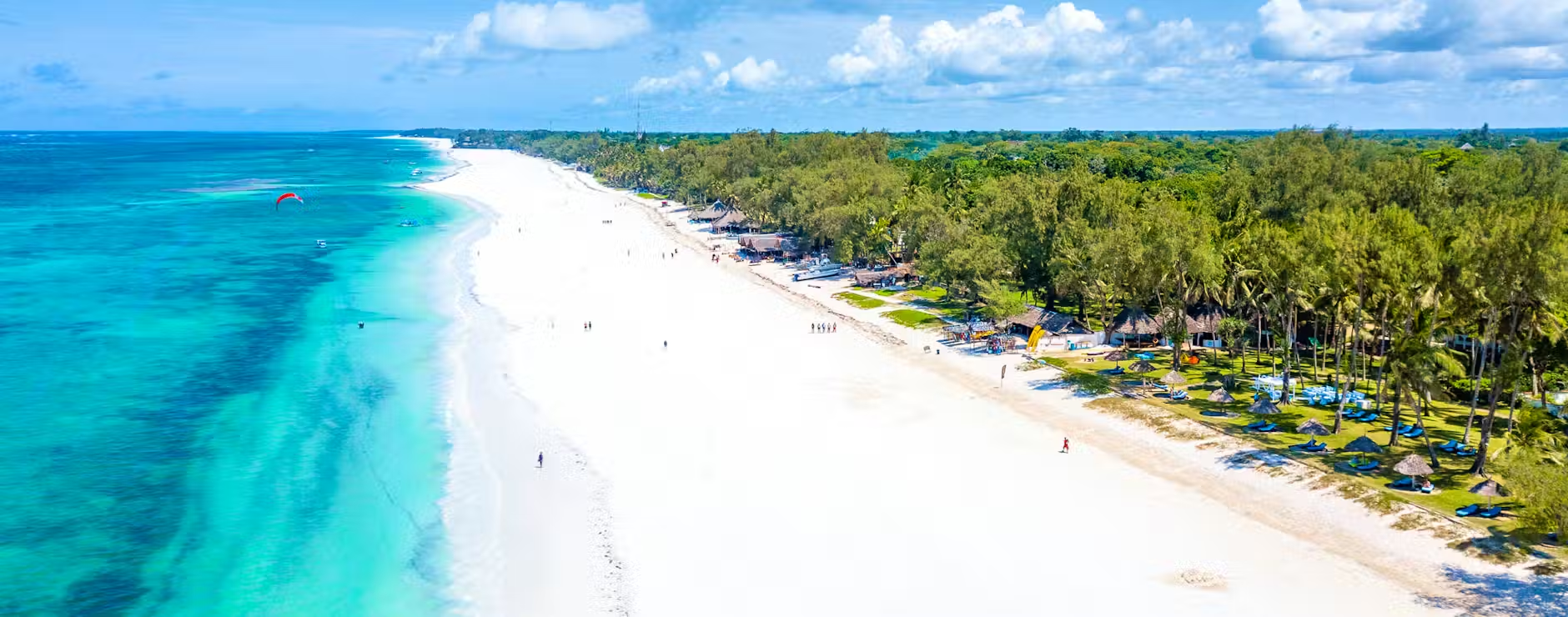
Paje Beach’s reliable trade winds make kitesurfing genuinely demanding to master, though the learning curve and progressive skill-building involved mean most visitors experience the sport’s steeper risk only after building considerable competence, softening its overall intensity for the average beginner-level visitor compared with a one-off activity like bungee jumping.
10. Quad Biking and Off-Road Vehicle Adventures
Uganda’s quad biking circuits around Jinja and Lake Bunyonyi deliver genuine physical engagement and a real sense of speed, but the guided, well-supervised format most operators run keeps this firmly accessible even to complete first-timers, placing it toward the more approachable end of this ranking.
Why Jinja Dominates the Upper End of This List
It’s worth noting how heavily Jinja features across the most intense entries here, a reflection of the town’s two-decade head start building professional adventure tourism infrastructure around the Nile’s dramatic whitewater. No other single location in the region matches this concentration of serious adrenaline activities within a compact, easily accessible area, which is precisely why Jinja has earned its reputation as East Africa’s genuine adventure capital rather than simply one adventure destination among many. Visitors with only a day or two to spare for adrenaline activities on an otherwise wildlife-focused itinerary would be hard pressed to find a more efficient single stop anywhere else in the region.
Choosing Activities Based on Personal Risk Tolerance
This ranking offers a useful starting framework, but personal risk tolerance, physical fitness, and prior relevant experience should ultimately guide any individual traveller’s choices far more than a general list. Someone with serious climbing experience elsewhere might find East Africa’s rock climbing routes considerably less daunting than this ranking suggests, while a nervous first-time flyer might find even a well-run tandem skydive genuinely overwhelming regardless of how professionally it’s managed. Building toward the region’s most intense activities gradually, starting with something like guided zip-lining or quad biking before attempting bungee jumping or serious rafting, tends to produce a more genuinely enjoyable experience than diving straight into the most extreme option on a first visit.
Beyond the Top Ten: Honourable Mentions
Several other activities covered elsewhere across this collection didn’t quite crack the top ten but deserve mention for travellers building a comprehensive adventure itinerary. Camel trekking through northern Kenya’s Chalbi Desert and Marsabit demands genuine physical endurance across multiple consecutive days, though the walking pace and camel-supported logistics keep acute risk relatively low compared with the activities ranked above. Traditional archery and spear-throwing sessions, deep sea fishing off the Kenyan and Tanzanian coast, and multi-day canoe expeditions across Rwanda’s Lake Kivu all demand real skill and physical commitment without carrying the same acute danger profile that defines this list’s upper reaches, making them worthwhile additions to a broader adventure-focused trip even without appearing among the region’s most extreme individual activities.
How Extreme Adventure Sports Fit Into a Broader East Africa Trip
Almost none of these activities work well as the sole reason for an entire East Africa trip, and most travellers instead weave one or two of the region’s more intense adventure sports into a broader itinerary built primarily around gorilla trekking, wildlife safaris, or coastal relaxation. A Jinja adrenaline day, combining rafting, bungee jumping, and quad biking, pairs naturally with a Uganda itinerary already including Bwindi’s gorilla trekking, while a Kenya trip built around the Maasai Mara can easily extend to include a paragliding detour to Iten or a rock climbing day at Hell’s Gate without requiring dramatically different logistics. Building extreme adventure sports into an existing safari itinerary, rather than planning a separate dedicated adrenaline trip, tends to produce the most satisfying overall experience for most travellers.
Safety Should Always Outrank Intensity
Whatever position an activity occupies on this list, safety record and operator quality matter more than raw adrenaline ranking when actually deciding where to spend limited trip time and budget. A well-run activity ranked lower on pure intensity will almost always deliver a better overall experience than a poorly managed version of something higher up this list, and travellers should research specific operators as carefully as they weigh which activities appeal to their own sense of adventure. Ultimately, the best extreme adventure sports experience in East Africa is the one matched honestly to a traveller’s actual skill, fitness, and appetite for risk, not simply the highest-ranked entry on any list, this one included. A traveller who leaves East Africa having genuinely enjoyed a well-run quad biking afternoon has had a considerably better trip than one who pushed themselves into a skydive out of obligation to a ranking rather than genuine personal interest.